Talk With Me was shaped by years of research with universities, therapists, schools and autism organisations across New Zealand and India.
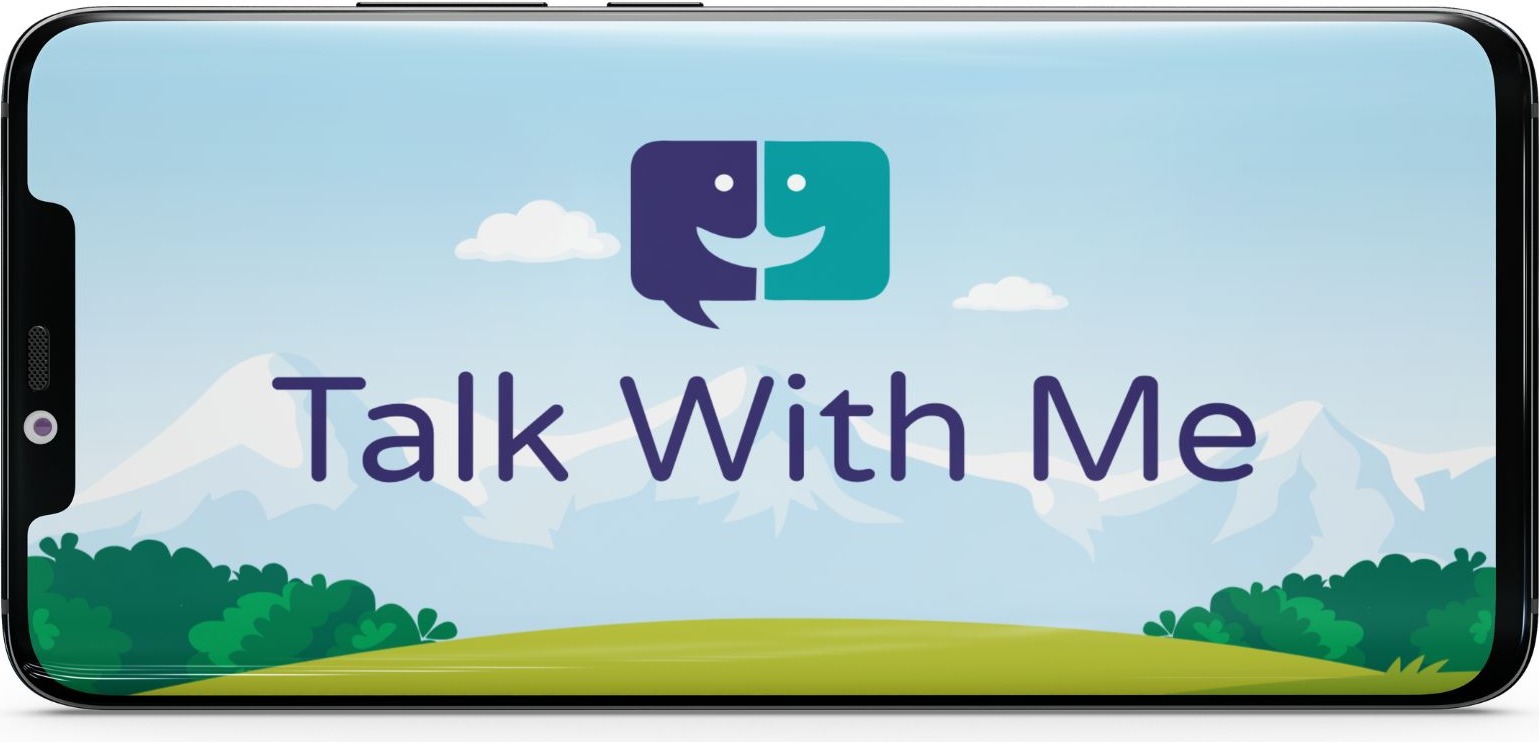
Talk With Me was built on years of research into augmentative and alternative communication (AAC). We designed it to be genuinely accessible, usable by children regardless of language ability, and intuitive enough for parents and therapists to adopt without training.
The app launched on iOS and Android, was covered by international press, and recognised by KiwiNet, Zino Ventures, and the Norman Barry Foundation. Skills learned through the app transferred to everyday life, not just screen time.
Talk With Me was first developed in 2015 by Swati Gupta, Principal Research Scientist at Callaghan Innovation, in close collaboration with the Upland Unit (special needs unit) of Hillmorton High School, Christchurch, NZ, and the school's speech language therapist and teachers.
A collaboration between Callaghan Innovation, the University of Otago, and Hillmorton High School's Upland Unit (Christchurch) conducted research testing children's level of engagement. It showed that "children's social interaction and engagement was superior with Talk With Me, in comparison to (1) the AAC device they use regularly, and (2) physical symbol based vocabulary cards."
Graham, H., Bond, A., McCormick, M., Hobbs, O., Yoo, C., Gupta, S., Mulligan, H., & King, M. (2016). A novel communication application to encourage social interaction by children with autism spectrum disorder. New Zealand Journal of Physiotherapy, 44(1), 50–57.
A Callaghan Innovation student project with Worcester Polytechnic Institute, USA analysed the need for technological communication applications for children with ASD, conducting 25 stakeholder interviews across New Zealand and internationally. Findings indicated that customizable, collaborative, and culturally appropriate tablet applications addressing communication skills could serve community needs.
J. Smith, H. Shevchuk, G. Ardamerinos. (2016). Investigating the Use of Technological Devices to Target Social Skills in Autism Spectrum Disorder Therapy in New Zealand. Unpublished thesis, Bachelor of Science. Worcester Polytechnic Institute, USA.
With support from the Norman Barry Foundation and Kiwinet, multiple informal intervention trials occurred in New Zealand and India, in English and Malayalam. These studies enabled real-world usage patterns and provided market insights. Key results included:
A speech and language therapist noted this was "an astounding result for these children who normally have attention spans of up to 3 minutes at best, and very limited social interaction. They usually require high intervention and persuasion for any activity. They rarely work together independently and, previously, if left alone, they wouldn't communicate at all."
A proof-of-concept study with the University of Otago and Autism NZ, supported by Callaghan Innovation, investigated home-based usage with parents instead of schools. The study found that "children engaged with the app early on, but engagement decreased over the study period, primarily due to the limited number of conversations available to them." However, "most families perceived their child to have gained increased confidence and participation at school, and improved turn-taking during conversations." The study concluded that customization features would increase the app's relevance to individual needs.
Wilkinson, A., Edwards, A., Gray, M., Ranabahu, T., Steenkamp, M., Mulligan, H., Gupta, S., King, M. (2018). An app to encourage social interaction by children with Autism spectrum disorder: A proof of concept study. New Zealand Journal of Physiotherapy, 46(1), 12–18.
We sincerely thank all these wonderful organisations that have helped us at various stages of our journey.
The app incorporates the Smarty Symbols image library (rights reserved to Smarty Symbols, LLC) and the Mulberry Symbol set.